



Say It Loud…
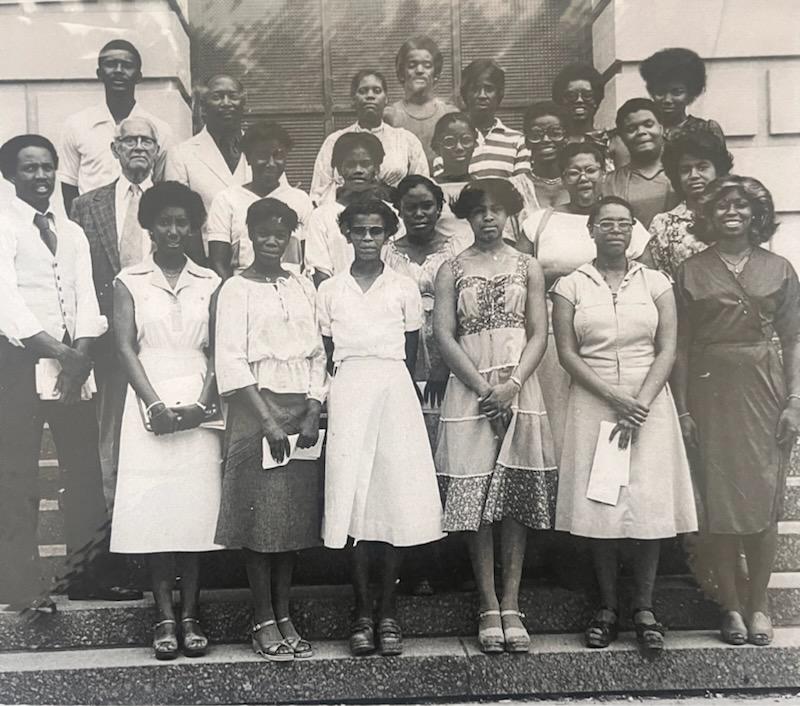
Black History is American history — and it’s most certainly Jacksonville history. Throughout the city, evidence of a proud, resilient past lives on through historical sites, monuments, and exhibits amplifying Black men and women’s triumphs in the face of adversity. Immerse yourselves in the rich culture on display throughout Jacksonville and learn more about the incredible progress driven by the strength of character and sheer willpower.
Central Park Civil War Monument
Located in the center of the Central Park square in Downtown Jacksonville, the Civil War Monument honors veterans from Jacksonville and Morgan County and selflessly served in the Union. One plaque in particular honors 30 local Black men, most of whom served in the Third Heavy Artillery and 29th Infantry.
Dr. Alonzo Kinniebrew Mural
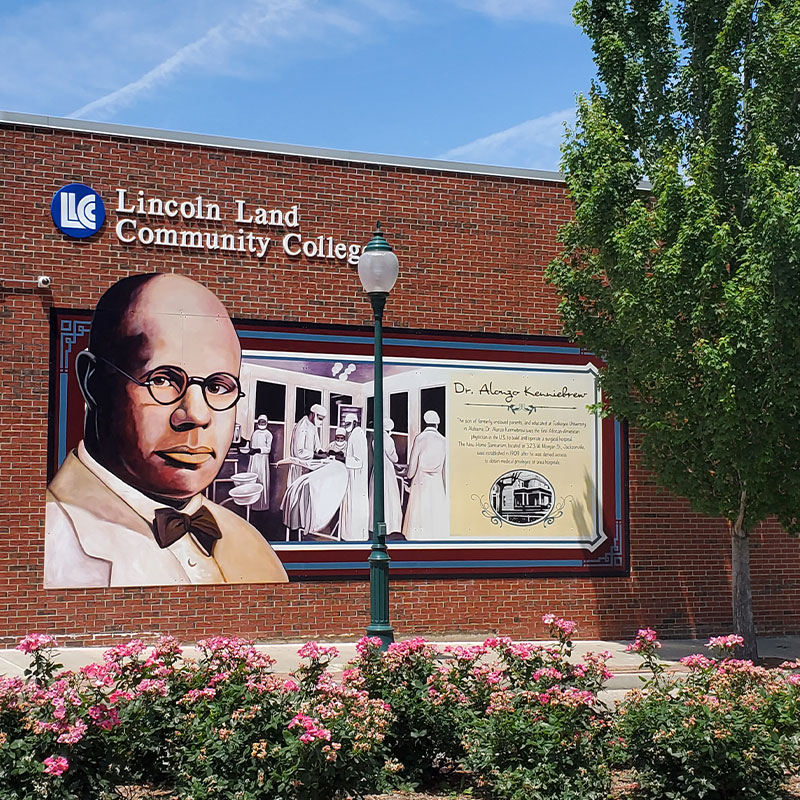
One of the city’s Walldog Murals, this installation honors Jacksonville resident Dr. Alonzo Kinniebrew. A native of Shorter, AL, who moved to Jacksonville in 1903, Dr. Kinniebrew was the first Black physician in the United States to own and operate his own hospital, New Home Sanitarium, at 323 W. Morgan St. At its height, this three-story hospital included 67 rooms, according to the Jacksonville Area Museum. Dr. Kinniebrew moved to Springfield in the 1930s, where he practiced until 1940 before he passed away in 1943.
Former Congregational Church
On the site now occupied by The Plaza and Times Square Sewing Complex, the Congregational Church — led by the Rev. William Carter — made a name for itself as the “Abolition Church.” Along with other businesses in Downtown Jacksonville, the Congregational Church became a meeting place for local abolitionists who risked their lives to aid those escaping slavery to find their way to freedom. The modern Congregational United Church of Christ located at 520 W. College Ave. is recognized by the National Park Service National Underground Railroad Network to Freedom program.
General Benjamin Grierson Mural
A Jacksonville native, Benjamin Grierson achieved fame as a Union general when he led the famed Grierson’s Raid, an 1863 campaign that severed Confederate communications between Vicksburg, MS, and the war’s Eastern Theater. After the Civil War, General Grierson was named colonel of the 10th Cavalry Regiment — aka the Buffalo Soldiers. The Walldog Mural at the 200 block of West State Street depicts Grierson throughout his life, including a scene riding with the Buffalo Soldiers.
Illinois College
The first college in Illinois to grant a degree in 1835, Illinois College, became a hotbed of abolitionist thought in Jacksonville — after all, the college was founded by the so-called “Yale Band,” a group of young theologians opposed to slavery, and the college’s first president was none other than Edward Beecher, brother of Uncle Tom’s Cabin author Harriet Beecher Stowe. Beecher Hall, the only remaining structure from those early days, was the site of a massive student protest after the murder of abolitionist Rev. Elijay Lovejoy in Alton and became an instrumental location in the Underground Railroad in Jacksonville as many students and professors became involved in the cause.
Jacksonville African American History Museum
Located in the historic Asa Talcott House — one of the city’s nine Underground Railroad sites — the Jacksonville African American History Museum shines a spotlight on the contributions of Black Americans throughout history. National icons are highlighted here alongside local heroes like Dr. Kinniebrew and boxer Ken Norton, one of five men to defeat the legendary Muhammad Ali.
Lincoln Anti-Slavery Speech Site
In 1858, Abraham Lincoln was engaged in a fierce campaign for a U.S. Senate seat against incumbent Stephen A. Douglas. In the midst of this bitter race, Lincoln stopped in Jacksonville on Monday, Sept. 27, to deliver a stirring, two-and-a-half-hour speech against slavery to a throng of delegates from Morgan, Cass, and Scott counties on the northeast corner of the Downtown square. Today, the site is marked with a wayside exhibit on the Looking for Lincoln.
Woodlawn Farm
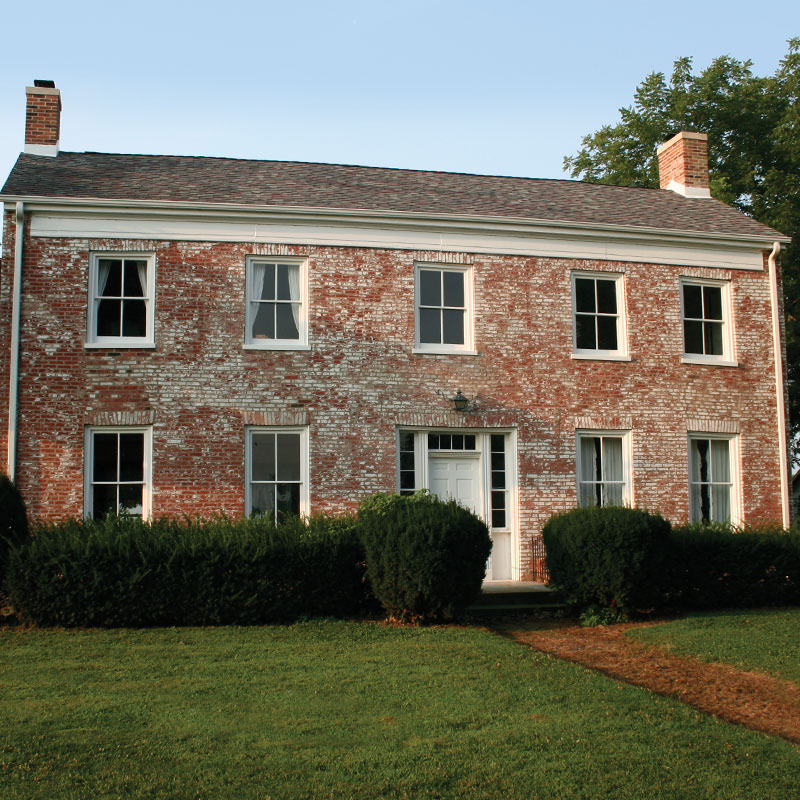
Many around Jacksonville risked a great deal to aid those escaping the cruelty of slavery to a better life, including Michael Huffaker’s family. The Huffakers’ homestead east of town became a haven for those following the Underground Railroad, who were housed on the property before continuing north. Woodlawn Farm invites visitors to see the farm as it was in the 1800s and get an up-close look at the lives of those who put themselves in harm’s way in defense of others’ liberty.